Skip to content

YOUR IDEA WE BUILD: Nexora, full-stack development and AI engineering in Dubai, UAE

I turn rough ideas into working software.

Full-stack developer, AI engineer and creative technologist in Dubai. I design the interface, engineer the system behind it, and put AI to work where it earns its place.

Taking on new projectsFull-Stack Development · AI Engineering & Creative TechnologyDubai, UAE

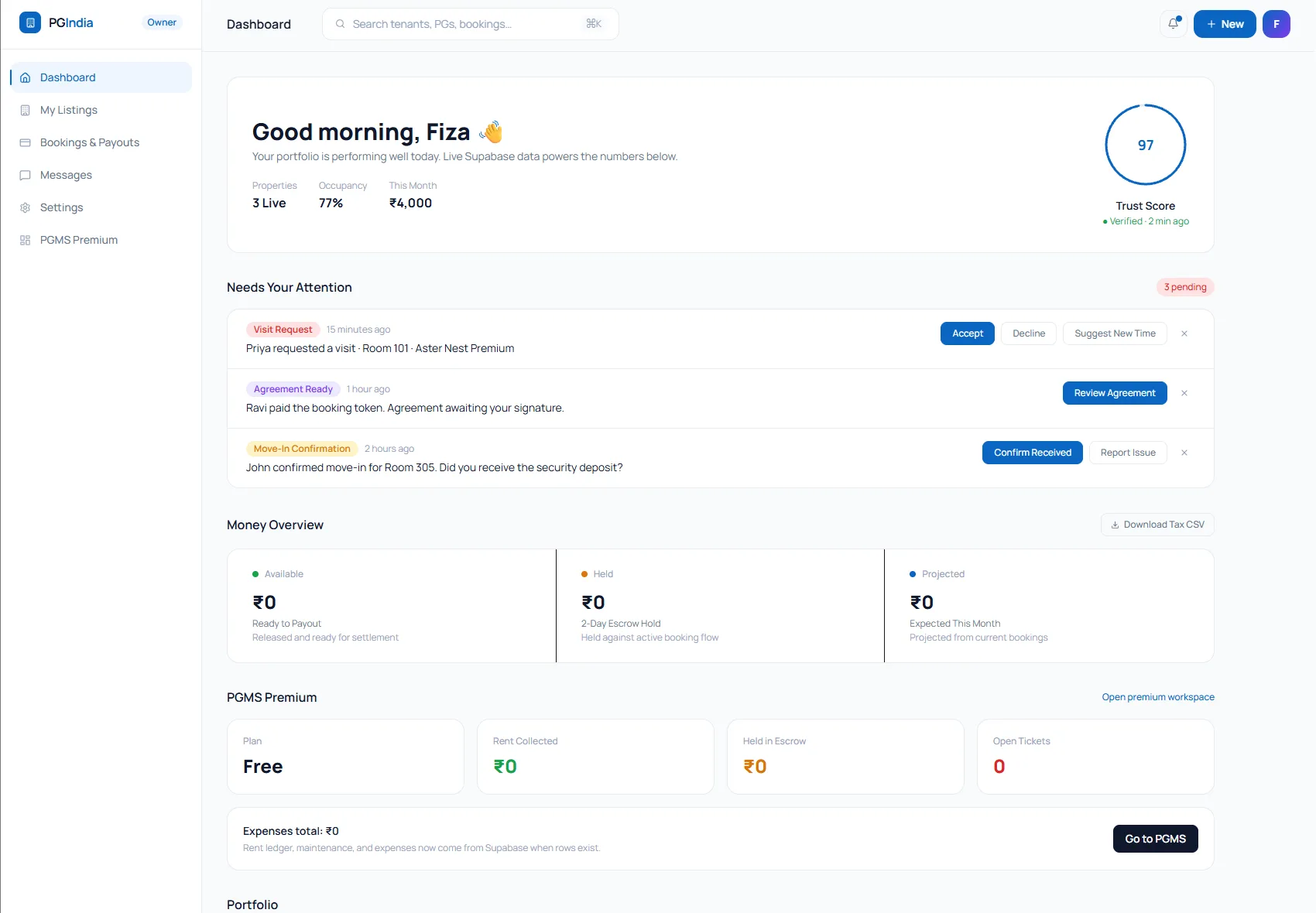
The PG India owner dashboard: a greeting, a trust score, visit requests awaiting action and a money overview.
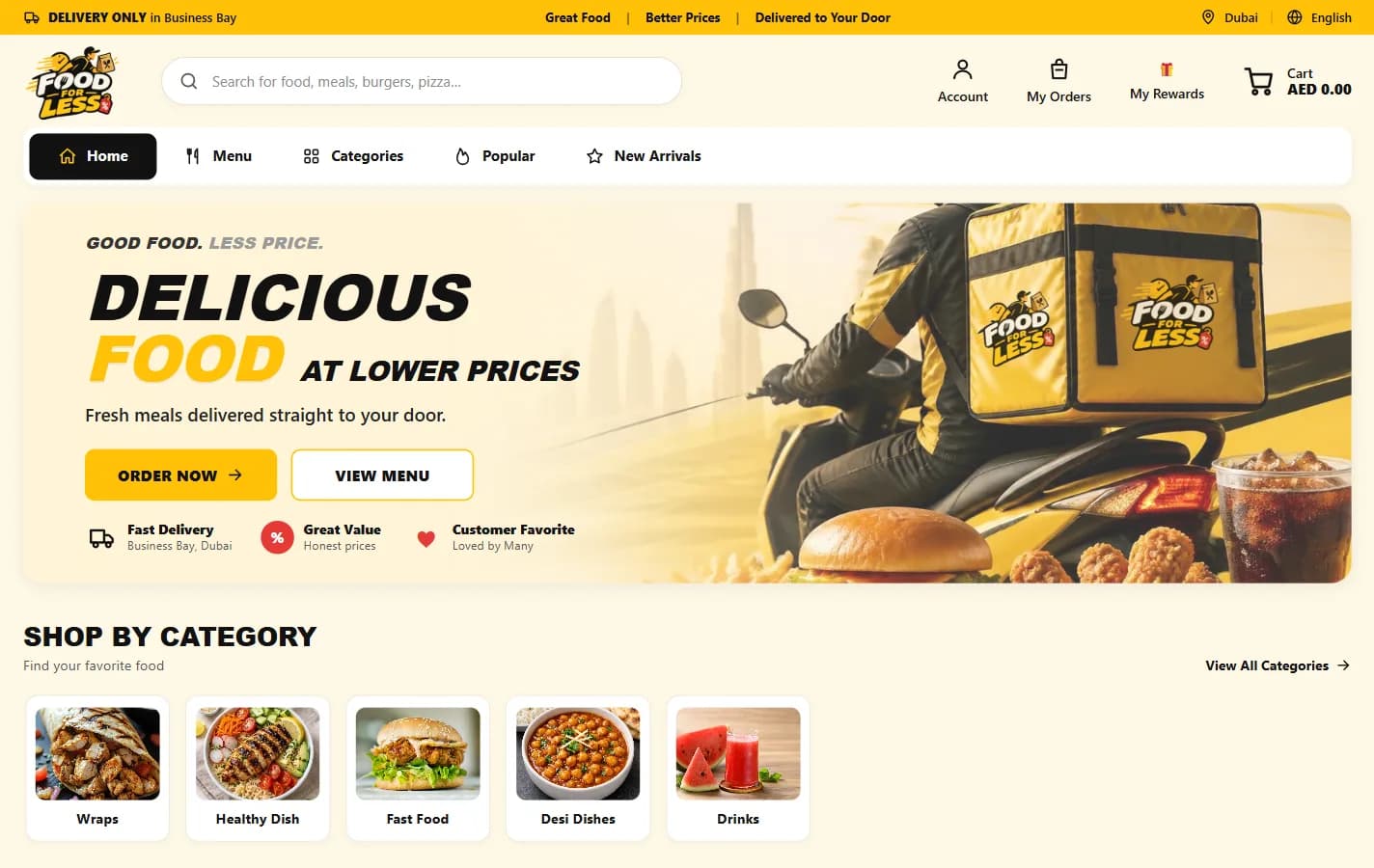
The Food For Less storefront: a search bar, a hero banner and a row of food categories.
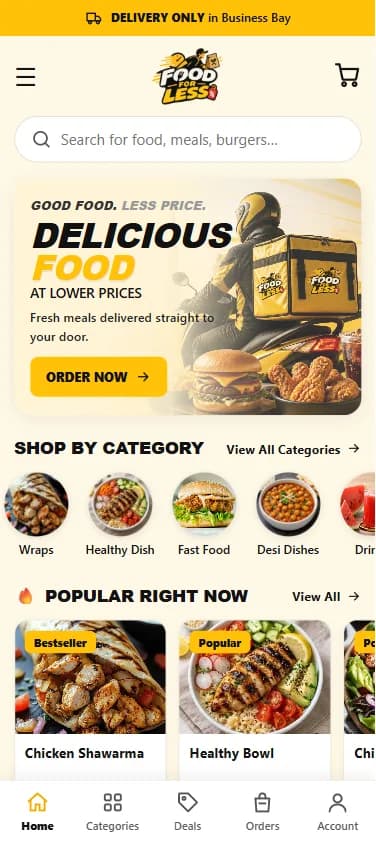
The Food For Less storefront on a phone, with a bottom navigation bar.

Fig. 1: real screens from the projects below, not mock-ups

I build the product, the system behind it and the intelligence inside it, from the interface down to the database.

  1. Products that run a business

    Ordering, payments, deliveries and the till for a working restaurant, in production.

    Food For Less
  2. AI with a job description

    Models given a narrow task, a schema they cannot step outside, and a person where they fail.

    Video Director
  3. Interfaces people trust

    Four roles, sixty-eight pages and one design language, built by one developer.

    PG India

Work

Four projects, described as they are: what is live, what is still being built, and what is an experiment.

Food For Less

One backend behind a restaurant's website, Telegram Mini App, kitchen, drivers and till, so every channel agrees on the order and the money.

Status
Live
Role
Co-developer
Built with
Python · FastAPI · SQLite · aiogram
The Food For Less storefront: a search bar, a hero banner and a row of food categories.
The Food For Less storefront on a phone, with a bottom navigation bar.

Fig. 2: The public storefront at food-for-less.com, captured 13 October 2026.

The PG India owner dashboard: a greeting, a trust score, visit requests awaiting action and a money overview.

Fig. 3: Owner dashboard in a development build. The names and figures are seeded test data.

PG India

A marketplace for paying-guest housing joined to the software owners use to run the building, so a listing reflects real beds instead of a stale advert.

Particulars
In development
Role
Sole developer
Surface
68 pages, 46 API route handlers
Database
20 SQL migrations, 5 isolation test suites
Roles
Tenant, owner, guardian, admin

Video Director

A local pipeline that takes comic pages to a voiced, subtitled episode, with a human review gate wherever a model can be confidently wrong.

Six consecutive frames of one generated animation clip, laid side by side.

Fig. 4: A review sheet from the first complete run: six sampled frames of one generated clip, as shown to the person approving it.

A twelve-panel comic page in colour.

Fig. 5: The source page for that run: an original twelve-panel page made to test the pipeline.

Fig. 6: diagram of the thirteen stages, drawn from the code
Status
Experiment
Role
Designer and developer
Built with
Python · ComfyUI API · Wan 2.2 · Z-Image Turbo

VentureWorld

A marketplace where businesses for sale or seeking investment are listed, reviewed and matched with investors, with AI assistance for writing the listing.

Status
Private, pre-launch
Role
Lead developer
Built with
Next.js · React 19 · TypeScript · Supabase

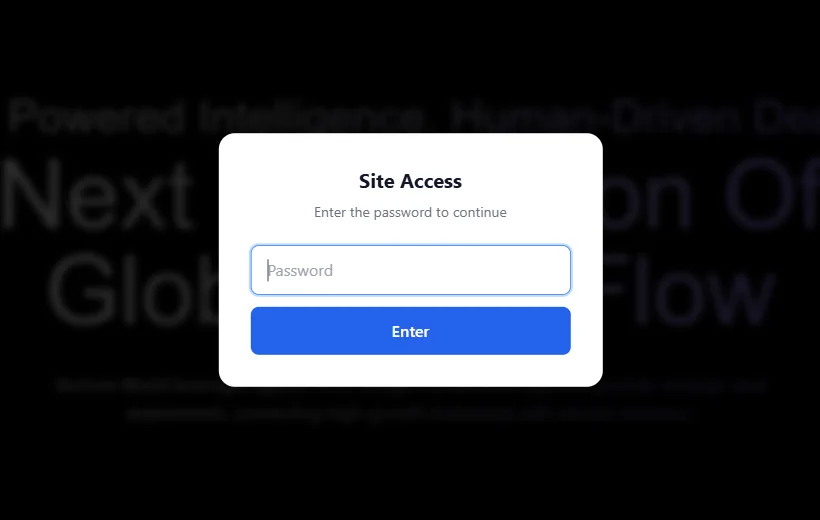
Fig. 7: What the public sees today: the site password gate, captured 13 October 2026.

A password prompt titled Site Access over a darkened page.
Fig. 8: diagram of the listing review flow

What you can hire me for

Six kinds of work. Each names the problem it solves and points to a project where you can see it done.

You have a product in your head, or a prototype that fell over when real users arrived, and you need one person who can carry it from screen to database.

  • Web applications, dashboards, customer portals and admin tools
  • Complete workflows: sign-up, the core task, payment, notifications, support
  • Role-based areas for customers, staff and administrators
  • A codebase with migrations, tests and a documented way to deploy it

PG India has four roles and 68 pages built by one developer. Food For Less runs a restaurant's ordering in production.

Request a project estimate

You want AI inside a real product, where it has to be correct, affordable and safe to be wrong, and a chat box bolted on the side is not it.

  • LLM features behind your own API, with keys kept on the server
  • Structured output with validation, so a model cannot write where it should not
  • Assistants that answer from your application's data
  • Voice synthesis and document-reading steps where they fit the job

VentureWorld's listing assistant suggests and waits for approval. Video Director gives its language model a schema with no field for the text it must never change.

Request a project estimate

The interface is fine. The trouble is underneath: orders in the wrong state, payments counted twice, permissions that depend on which button someone found.

  • Data models and migrations that can be applied to live data
  • REST APIs with authentication, authorisation and rate limits
  • Payment integrations with signed webhooks and idempotent handling
  • State machines for workflows that must not skip steps

Food For Less records every payment once, even when a webhook and a browser redirect report it at the same moment.

Request a project estimate

You are running a multi-step creative or data process by hand, and the steps that use models fail in ways nobody notices until the end.

  • Pipelines with resumable stages and saved artifacts
  • Human review gates where automation cannot be trusted
  • Generative image, video and speech steps driven through an API
  • Resource planning for local GPUs, and reports that say what really happened

Video Director runs thirteen stages, stops at six for review, and labels its own output honestly.

Request a project estimate

The product works but feels like a form. You need an interface people trust in the first five seconds, on a phone, without it getting slow.

  • Responsive interfaces designed for mobile first
  • Motion systems with GSAP and CSS that respect reduced-motion settings
  • Canvas and generative graphics where they explain or identify something
  • Accessible components: keyboard paths, focus states, readable contrast

This site is the sample: its layout system, command palette, motion and generative canvas are written by hand.

Request a project estimate

Something already exists and has to keep running while it changes: a new channel, a third-party service, a safer way to release.

  • Database and system design reviews with a written plan
  • Integration of payments, messaging, maps, printing and identity checks
  • Release processes that test before they switch and can roll back
  • Security hardening: tenant isolation, audit trails, permission models

Food For Less updates itself on the restaurant's only machine by testing the new release before it stops the old one.

Request a project estimate

Products break at the joins

Where the screen meets the API, where the API meets the money, where a model meets real input. I work on both sides of each one. Here is the whole stack, cut through.

What people see and touch: layout, state, motion, and whether it works on a phone.

Build
React, Next.js, TypeScript, JavaScript, HTML, CSS, Tailwind CSS
Motion
GSAP, ScrollTrigger, Framer Motion, Canvas graphics
Practice
Responsive design, Accessibility, Server-rendered UI

The rules of the business, written once on the server and shared by every screen.

Build
Python, FastAPI, Node.js, REST APIs, Route handlers
Access
Authentication, Role-based access control, Signed links, Rate limiting
Integrations
Stripe, Razorpay, Webhooks, Telegram bots and Mini Apps, Twilio SMS

Where the truth is kept, and the guarantees that stop it being quietly rewritten.

Stores
PostgreSQL, Supabase, SQLite
Design
Schema design, Migrations on live data, SQLAlchemy and Alembic, Row Level Security
Integrity
Append-only ledgers, Database triggers, Idempotency keys, Audit trails

Models used as components: given a narrow job, a schema, and a human check where they fail.

Language
LLM integration, Structured output, Local models with Ollama, Model benchmarking
Generative
ComfyUI workflows, Image and video generation, Inference pipelines
Voice
Text-to-speech, Voice cloning, Per-line fallback chains
Orchestration
Resumable stages, Review gates, Background jobs

Getting it onto a real machine, keeping it there, and changing it without breaking it.

Ship
Git and GitHub, GitHub Actions, Vercel, Cloudflare
Verify
Automated tests, Browser tests, Migration rehearsal, Health checks
Harden
Backups and rollback, Debugging in production, Security reviews
Specimen
Flow field
Input
Pointer, left to right
Order
0.35

A generative drawing. Moving the pointer to the right snaps drifting lines onto a right-angled grid.

The lab

Above: drift turning into circuitry as you move right. Below: the order logic from Food For Less, rewritten as a small model that runs in your browser. Try to break it.

Neither is a recording, and neither is connected to a production system. Dashed buttons are moves the server would refuse; press them to see why.

  1. New
  2. Accepted
  3. Preparing
  4. Ready
  5. Assigned
  6. Out for delivery
  7. Delivered
Order
New
Payment
Not payable yet
Method
Online
Customer PIN
Not entered

Restaurant

Customer

Driver

Solid buttons are legal now. Dashed ones are not, and you can press them to see the refusal.

Event timeline

Append only · 0

A new order is waiting for the restaurant. Try to pay for it before it is accepted.

    Have something ambitious in mind?

    I take on product builds, AI features, and the unglamorous engineering underneath them. Tell me what you are making and where it is stuck.

    Start a projectTaking on new projects

    sheroz@nexoratechnology.me · Dubai, UAE · GST (UTC+4)

    Replies come from me, not a form letter

    Esc

    23 results.